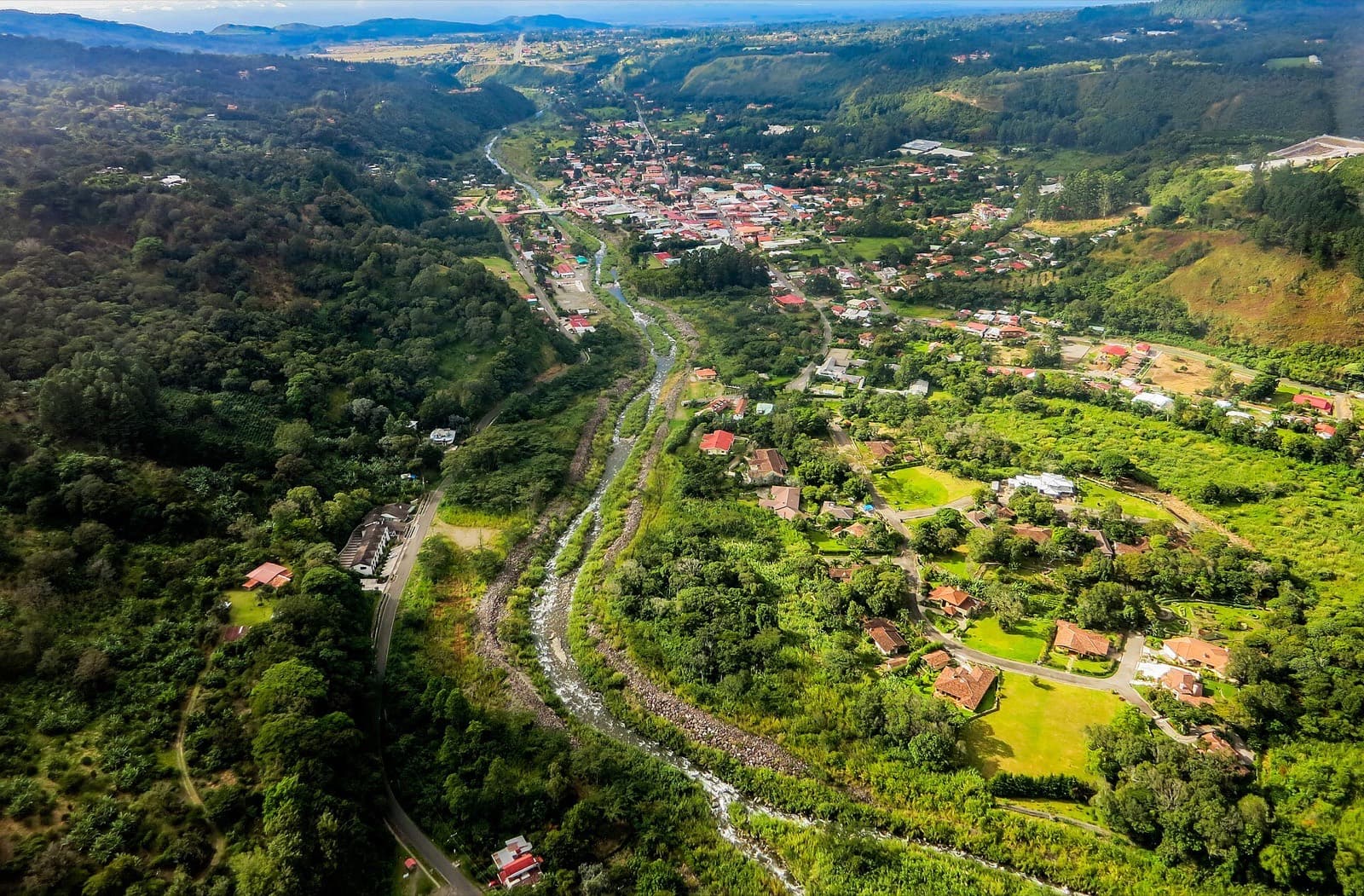
Both countries offer a retiree visa for a lifetime pension of at least $1,000 a month. Panama’s is indefinite, uses the US dollar and comes with legal retiree discounts; Costa Rica’s is renewed every two years and requires you to join its public health system. For a cool mountain town, compare Boquete (about 1,200 m) with Costa Rica’s Atenas (about 700 m) or Grecia (about 1,000 m).
Retiree visas
Panama’s retiree (jubilado/pensionado) permit, according to the immigration service’s own requirements sheet, needs a lifetime pension of at least $1,000 a month from a foreign government, an international body or a private company, plus $250 a month for each dependant. The minimum drops to $750 if you own property in Panama worth more than $100,000, and couples may combine pensions. The permit is indefinite, with no renewals. The sheet mentions only pensions, so do not count on rental income or savings qualifying.
Costa Rica’s pensionado route also needs a lifetime pension of at least $1,000 a month; its rentista route takes stable income of at least $2,500 a month instead. Both are granted for two years at a time and renewed. These figures come from a Costa Rican immigration law firm and a news guide, both from September 2026; the immigration authority’s own site could not be read.
Retiree discounts in Panama
Panama’s Law 6 of 1987 gives retirees and pensioners set discounts, and news reports from 2025 and 2026 say they apply to foreign residents as well as Panamanians. Show your residency card to claim them. Among them:
- Cinema, theatre and other entertainment: 50%.
- Hotels: 50% Monday to Friday, 30% Friday to Sunday.
- Restaurants: 25% on your own meal (15% at fast-food franchises).
- Intercity buses and boats: 30%; flights: 25%.
- Medicines: 20%; private hospitals and clinics: 15%.
- Home electricity, water and a phone line: 25% within set limits.
Healthcare
In Costa Rica, legal residents must join the public health system, the Caja (CCSS), and keep paying through every renewal; in 2024 lawmakers kept that rule for pensionados and rentistas. The Caja sets the income your contribution is based on, and sources quote different rates, so ask the Caja for your figure.
Panama’s retiree permit asks for a health certificate, not insurance, and joining Panama’s social security (CSS) is not needed for the visa. A voluntary scheme exists, but sources disagree on what it costs; the alternative is private insurance. Around Boquete, the hospitals local guides name, Hospital Chiriquí and Mae Lewis, are in David, about an hour away.
Money and tax
Panama uses the US dollar: its own balboa is fixed one-to-one with the dollar, and dollar notes are the everyday cash. Costa Rica uses the colón, so a dollar pension rises and falls with the exchange rate there.
Both countries tax on a territorial basis — income earned inside the country. Panama’s 2026 change, Law 526, applies to companies in multinational groups, not to individuals. Costa Rica’s government proposed in September 2026 to tax residents’ foreign passive income, such as dividends, interest and rents, at 15%; the reports do not say whether pensions would be included, and it is not law. Take advice from a tax adviser before you decide.
Where Boquete fits
If what draws you to Costa Rica is the mild highland climate of the Central Valley, Boquete is Panama’s equivalent. It sits at about 1,200 m, with a mean temperature of about 21 °C at its Los Naranjos weather station. In Costa Rica, Atenas sits at about 700 m and Grecia at about 1,000 m.
The trade-off is distance. Atenas is about 30 minutes from Costa Rica’s main international airport near San José. From Boquete you drive about an hour to David, then fly about an hour to Panama City for international flights.
Rents are broadly similar. Boquete runs about $700–1,200 a month for one or two bedrooms (Relofirm, 2026), and Atenas town centre about $700–1,100 for two bedrooms (CostaRicaBoard, March 2026). Volcán, Boquete’s quieter neighbour, starts lower, at about $350–700 for one or two bedrooms.
See also Best places to retire in Panama: Boquete, Volcán, Coronado or Panama CityQuestions people ask
Is it cheaper to retire in Panama or Costa Rica?
The visa income minimum is the same, $1,000 a month in pension. Mountain-town rents are similar. Panama adds legal retiree discounts and has no currency risk on a dollar pension, while Costa Rica adds compulsory public health contributions.
How much pension do I need to retire in Panama?
A lifetime pension of at least $1,000 a month, plus $250 per dependant — or $750 if you own Panamanian property worth over $100,000.
Does Panama use the US dollar?
Yes. The balboa is fixed one-to-one with the dollar, and US notes are the everyday cash.
Sources
- Servicio Nacional de Migración — requirements for the retiree (jubilado/pensionado) permit
- La Prensa — retiree discounts under Law 6 of 1987 (Jul 2026)
- La Estrella — discounts for retirees and pensioners (Oct 2025)
- CRIE — Costa Rica pensionado requirements (Sep 2026)
- CRIE — Costa Rica rentista requirements (Sep 2026)
- The Rio Times — Costa Rica visas and residency (Sep 2026)
- The Rio Times — healthcare in Costa Rica for expats (Sep 2026)
- Costa Rica Law — residents must keep contributing to the Caja (Apr 2024)
- Legal Solutions Panama — CSS vs private health insurance (Sep 2026)
- Law 1 of 2014 — Panama income tax on income produced in Panama
- Andersen — Panama Law 526 of 2026 (companies in multinational groups)
- Delfino — Costa Rica bills to tax foreign passive income (Sep 2026)
- Wikipedia — Panamanian balboa
- Wikipedia — Costa Rican colón
- Wikipedia — Boquete, Chiriquí
- CostaRicaBoard — Atenas guide (Mar 2026)
- Wikipedia — Grecia canton
- Latin America MLS — Volcán guide (May 2026)
- Relofirm — Panama cost of living (2026)